This article discusses the separation of indigenous people from their own society and culture. They were not allowed to speak their own language and practice their own religion and culture. Americans and Canadians tried to assimilate them so that they can be more educated. Marker describes the process of assimilation and how the children were separated from their family and culture and were for forced to go to boarding schools.
I believe it is important for people to be able to keep and practice their own culture in the way they wanted to. The world is a combination of different cultures and every culture is equally important. Every culture should be respected by others .
Tuesday, October 30, 2012

Thursday, October 11, 2012
Food Sustainability - Santa Monica
The demand for food is forecast to grow by at least 50%
over the next four decades due to population growth. When local food production
failed to meet the demand, commercial agriculture began to thrive. Given all
the negative aspects of commercial agriculture, people should start
thinking about how to make food production more sustainable and start making
movements towards this goal. The City of Santa Monica is taking the lead by supporting
sustainable, local, and organic food through its own purchasing, and by helping
to make sustainable food more accessible to its residents. Santa Monica
was also the first city to sign on to the Cool Foods Pledge, and had
elevated food sustainability as a priority focus within the Sustainable City Plan.
Sunday, October 7, 2012
Environmental Ethics #2: bottled water
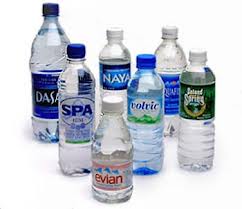
Nowadays, consuming bottled water has become one of the most common thing to do; nearly 1 billion bottles of water are being shipped to each cities each week in the US alone. At this point, what we should do is try to use as little energy as we can because we are running out natural resources; but instead, we are wasting about 1.5 million barrels of oil a year making plastic water bottles. Is bottled water really better and healthier than tap water? Why do people spend so much money on bottled water when tap water is just as good and healthy?
Monday, October 1, 2012
Environmental Ethics
This
blog post written by Gavin Van Horn was a very
interesting post. In this essay, he focuses his points on environmental ethics
and the definition of being humans. He sees that the entire planet as a team;
every animal and every plant is a member of the team. In this team, there is no
letter “I”, there is no individualism, because we are a whole. In this world,
everything is constantly changing; humans are simply the “constant process
rather than final product” (Van Horn). To make the survival of the entire team
last longer, humans need to realize that we are only beings-in-relation not
beings-in-control. This means that human survival also relies on others who we share
the planet with.
risks of fracking
http://www.nature.com/nature/journal/v477/n7364/full/477271a.html
In
Howarth’s article, he writes about the risks of fracking and whether it should
be stopped. In this article, he points out that many fracking addictives are
toxic and mutagenic. He also points out the fact that “frackig extracts natural
salts, heavy metals, hydrocarbons and radioactive materials from the shale,
posing risks to ecosystems and public health when these return to the surface”
(272). When the poisonous and toxic fluids return back to the surface, they
contribute to the methane contamination in the water wells. Right now, we have
not figured out a way to handle everything safely, so it is the best that the
gas remain safely in the shale.
McKibben and 350.org
Bill McKibben, the founder of the
international grassroots climate campaign 350.org, has done so much to educate
people and to warn people about the importance of protecting the environment.
According to McKibben and his research team, the number 350 is significant
because “any value for carbon in the atmosphere greater than 350 is not
compatible with the planet on which civilization developed and to which life on
Earth is adapted” (3). This simply means that when the amount of carbon dioxide
in the atmosphere exceeds 350ppm, it is considered unsafe for the planet and
humans. Unfortunately, the amount of carbon dioxide in the atmosphere has
already exceeded 350ppm at this point. This is a sign, a warning for humans,
telling us that we need to stop waiting and start acting right now because we
have no other choice. Many people doubt his way of warning people will not work.
Even though the number 350 has drawn big attentions from many people, but it is
still far from enough. As McKibben points out, it is the will to act that people
need.
The burning of
fossil fuels is currently the biggest source of carbon dioxide emission, but the
fossil fuel industry has not been very supportive because the people who work
for the fossil fuel industry are still only concerned for their own wealth and
unable to see the fact that this issue has become a global issue which requires
immediate attention from every single person.
Thursday, September 27, 2012
EPA: Natural Gas Fracking Linked to Water Contamination Synthesis
Near the town of Pavillion, people have been
drinking contaminated water for years. The Environmental Protection Agency has
roughly concluded that the contamination was due to natural gas fracking.
When
EPA conducted their first tests in Wyoming, they concluded that the problems
with the cement and water pollution are not connected to fracking because there
were many other factors that should be taken into consideration.
In
the mid-1990s, many residents in the area started to complain about the water
near Pavillion. Later in 2004, situations continued to get worse. “Several
residents complained that their well water turned brown shortly after gas wells
were fracked nearby” (EPA) In 2008, EPA came back and started a new round of
tests. They concluded that the water was highly contaminated; residents should
stop drinking from the wells around them because they could get poisoned; it
might even cause explosion because of the amount of methane that was in the
water. At the end, the EPA concluded that the contamination of water was caused
by fracking because the wells in the area were “fracked at shallower depths
than many of the wells in the Marcellus shale and elsewhere” (EPA).
When
the government officials asked to see a detailed breakdown of every compound
used underground, the fracking company declined the request. They also accused
the EPA for not being consistent with their labels and data.
Fracking
is risky after all because nobody can guarantee everything will work out
perfectly. Right now, no decision has been made yet, the EPA’s finding is
scheduled to be peer reviewed.
Subscribe to:
Posts (Atom)